


Not sure which plaster ceiling cornice style is right for your renovation? Here’s a plain-English guide to the most popular cornice profiles used in Sydney homes, from simple cove to ornate heritage mouldings.
What Is a Ceiling Cornice and Why Does It Matter?
If you have ever walked into a room and something just felt “finished” about it, chances are the cornice had a lot to do with that. A plaster ceiling cornice is the moulded profile that runs along the joint where your ceiling meets the wall. It covers the raw join, tidies up any imperfections, and adds character to the room.
Whether you are building new, renovating a tired room, or restoring a period home across Western Sydney, the cornice you choose shapes the entire feel of the space. Pick the right one and everything looks intentional. Pick the wrong one and it sticks out like a Hills Hoist in a penthouse. For a deeper look at what cornice actually is and what it does, check out the guide on what is cornice.
The good news? There are plenty of cornice styles to suit every type of home, every budget, and every taste. Here’s a breakdown of the most common plaster ceiling cornice profiles you will come across in Sydney, and which ones work best for different situations.
Cove Cornice: The Classic Go-To
Cove cornice is the most widely used cornice profile in Australian homes. It has a smooth, concave curve that creates a gentle transition from wall to ceiling. No fuss, no ornament, just a clean, rounded sweep.
You will find it in everything from brand-new builds in Marsden Park to 1990s renovations in Penrith. It comes in various sizes, with 55mm and 75mm being the most common in residential work. The smaller profiles suit rooms with standard ceiling heights, while a larger cove adds a bit more presence in open-plan living areas.
Best for:
- Modern and contemporary homes
- Rental properties and investment builds
- Budget-friendly renovations where you want a neat finish without spending big
- Rooms with standard 2.4m to 2.7m ceilings
Cove cornice is also one of the easiest profiles for a plasterer to work with. The joins and mitres are straightforward, which keeps installation costs down. It is a solid, no-nonsense choice, and there is nothing wrong with that.
Decorative and Ornamental Cornice Profiles
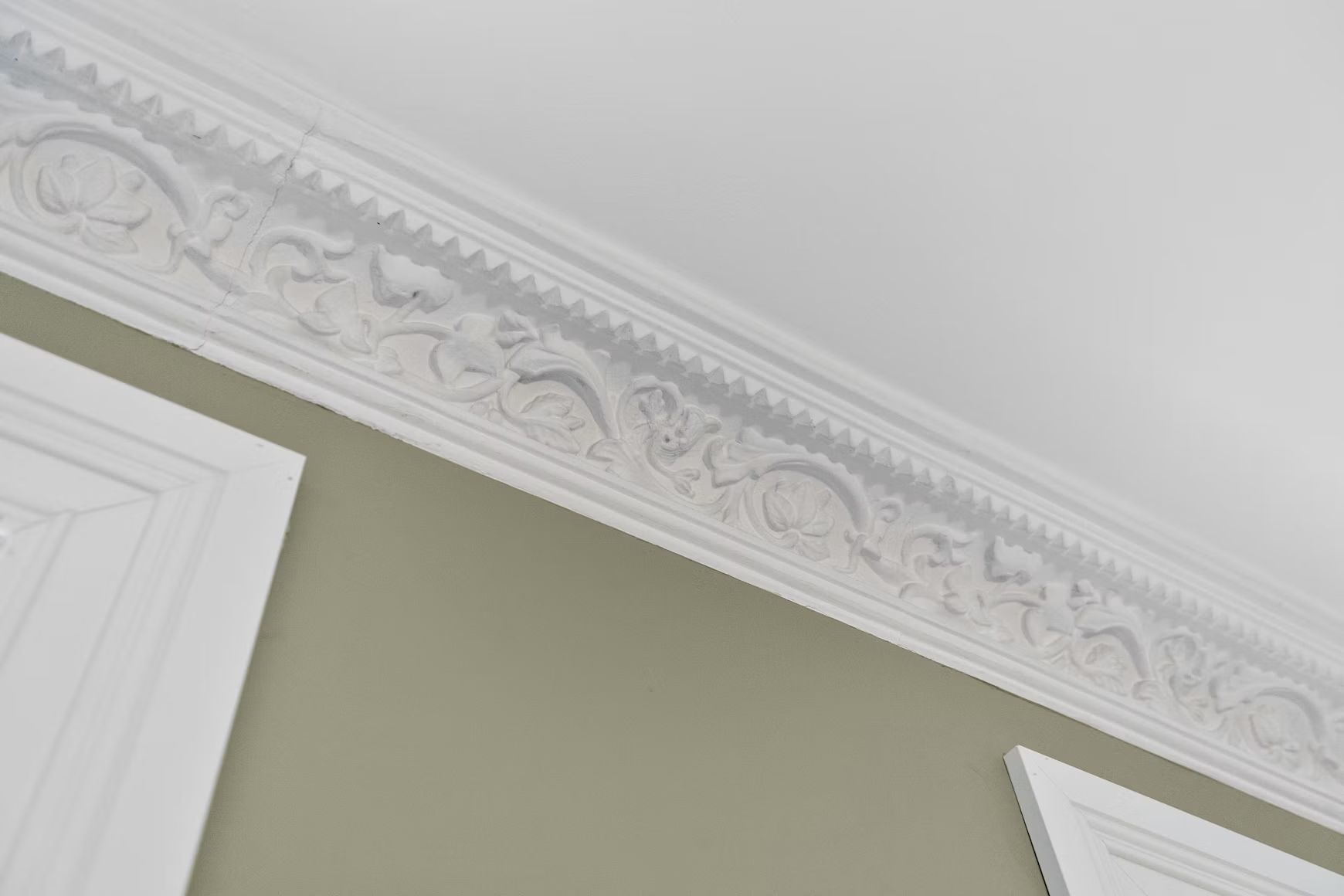
This is where things get a bit more interesting. Decorative cornice profiles feature moulded patterns along the face of the cornice, including things like egg-and-dart detailing, acanthus leaves, rope twists, dentil moulding, and floral scrollwork. The level of detail can range from subtle to seriously ornate.
These profiles are larger than a standard cove, typically running from 90mm up to 200mm or more. They add visual weight to a room and draw the eye upward, which can make a high-ceilinged room feel even grander.

Best for:
- Federation, Victorian, and Edwardian homes where the original detailing needs to be matched or restored
- Formal living and dining rooms where you want a sense of occasion
- Heritage-listed properties with heritage council requirements
- Homes with ceiling heights of 2.7m or above, where the extra visual depth does not overwhelm the room
The key with decorative cornice is getting the profile right for the era of the home. A Federation terrace in Drummoyne calls for a different profile than a Victorian cottage in Hunters Hill. Getting this wrong sticks out, and getting it right ties the whole room together. Sydney Wide Plastering carries a range of cornice profiles and handles heritage restorations as part of the regular scope of work.
Heritage Cornice: Restoring the Original Character
Heritage cornice restoration is its own category because the stakes are different. When you are working on an older Sydney home, particularly a late-1800s or early-1900s property, the original plaster cornice is often hand-run or cast in situ. It cannot simply be replaced with something off a shelf at the local supplier.
Restoring heritage cornice means matching the exact profile, the depth of the moulding, and the style of the original detail. In some cases, a section of the surviving cornice needs to be used as a template to create new moulds. If there is any ‘cutting corners here’, it becomes obvious.

If you are renovating a vintage plaster ceiling and trying to preserve the period character, matching the cornice is one of the most important details to get right. A room with a beautifully restored ceiling rose but mismatched cornice looks half-done.
Best for:
- Heritage-listed and conservation area properties
- Older terraces, cottages, and Federation homes across Sydney
- Rooms where original plaster detail has been partially damaged by water, movement, or previous bad repairs
- Homeowners who want to honour the original craftsmanship of the property
Shadowline Cornice (Square Set Finish)
A shadowline cornice, also called a square-set finish, is actually the absence of a traditional cornice. Instead of a moulded profile, the ceiling meets the wall in a sharp, clean line with a recessed 10mm shadow gap. No moulding, no curve, just a crisp edge.
This look is everywhere in architect-designed homes, high-end apartments, and contemporary renovations. It gives rooms a more open, minimal feel and makes ceilings appear taller because there is no horizontal profile breaking the sightline.
The catch? A shadowline finish is harder to install than traditional cornice. The framing has to be spot-on, the plasterboard needs to be perfectly level, and the jointing has to be immaculate. There is nowhere to hide imperfections.
There is a detailed comparison of shadowline cornice vs standard cornice on the blog if you want to dig deeper into the pros and cons.
Best for:
- Modern, minimalist, and contemporary interiors
- New builds designed with clean, pared-back finishes
- Homes with lower ceilings where you want to maximise the feeling of height
- Open-plan living spaces where you want the walls and ceiling to flow as one surface
Not ideal for:
- Older homes with uneven walls and ceilings (the imperfections will show)
- Budget renovations (the installation cost is higher than traditional cornice)
Stepped and Layered Cornice Profiles
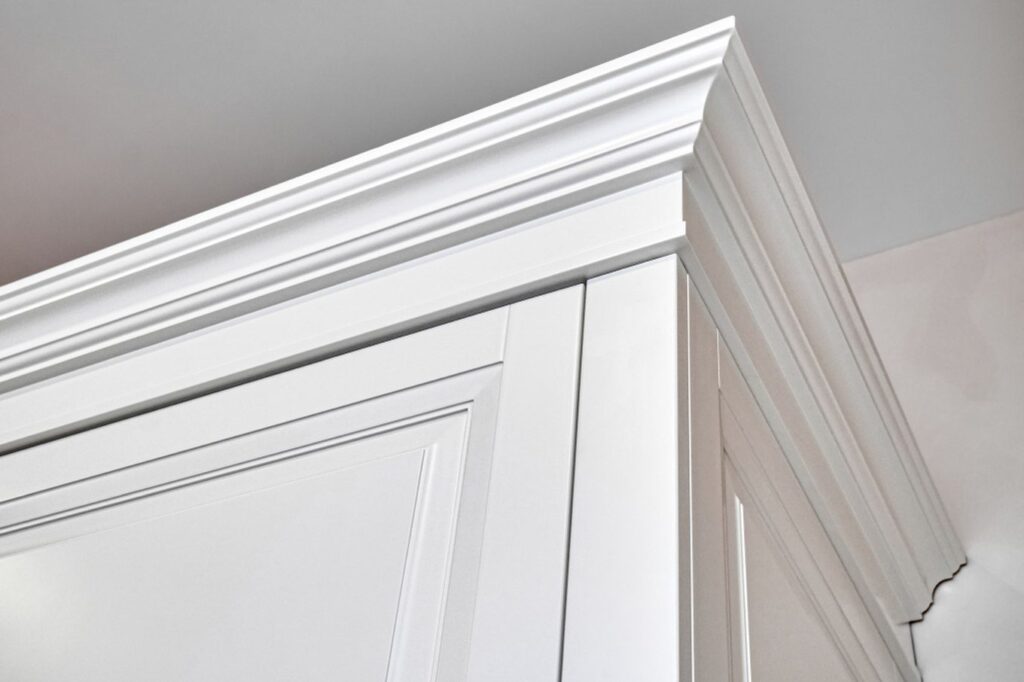
Stepped cornice, sometimes called multi-tiered or layered cornice, features two or more distinct levels or steps in the profile. Rather than a single smooth curve or a single moulded face, the cornice steps outward in graduated layers, creating depth and shadow.
This style sits somewhere between the simplicity of a cove cornice and the intricacy of a decorative profile. It adds visual interest without needing ornate pattern work, which makes it a popular choice for transitional interiors that blend traditional and modern elements.
Best for:
- Homes where you want more presence than a basic cove but are not after heavy ornamentation
- Larger living rooms, hallways, and master bedrooms
- Transitional and Hampton-style interiors
How to Choose the Right Cornice Style for Your Home
Choosing a plaster ceiling cornice style comes down to four things:
1. The style of the home
A Federation terrace and a 2026 new build in Oran Park are two completely different beasts. The cornice should match the architectural style. Ornate profiles suit period homes. Simple cove or shadowline suits modern builds. Mixing eras rarely works.
2. Ceiling height
Higher ceilings can carry larger, more detailed profiles. Standard 2.4m ceilings look best with a modest cove or a shadowline. Anything too deep on a low ceiling will make the room feel closed in.
3. The rest of the room’s detailing
Look at the skirting boards, architraves, and door frames. The cornice should be in the same visual family. Heavy, detailed skirting boards with a flat shadowline ceiling looks unresolved. Simple skirting with an ornate cornice has the same problem.
4. Budget
Plain cove is the most affordable to supply and install. Decorative profiles cost more (the mouldings themselves are pricier, and the installation is slower). Heritage restoration is the most labour-intensive. Shadowline sits in the middle for materials but higher for labour due to the precision required.
Common Cornice Problems (and When to Call In a Pro)
Even the best cornice will eventually need attention. The most common issues are:
- Cracked cornice along the join line, usually caused by building movement or seasonal expansion
- Separated cornice pulling away from the wall or ceiling, often from poor original fixing or moisture
- Water-damaged cornice stained, swollen, or crumbling from a roof leak or condensation
- Mismatched repairs where a previous patch used the wrong profile or a visible lump sits along the join
Trying to fix cornice yourself is one of those jobs that looks simple and goes sideways fast. Matching the profile, getting the mitres right in the corners, and blending the finish so the repair disappears once painted takes proper skill and the right tools. It is not a weekend DIY job.
If the damage is beyond a simple cosmetic fix, or the cornice is old and the profile is no longer made, you need someone who knows what they are doing. Cornice repairs and installation is core work at Sydney Wide Plastering.
Cornice and Suspended Ceilings
Worth mentioning: if you are installing a suspended ceiling as part of a renovation or commercial fitout, the cornice detail at the perimeter still matters. A dropped ceiling with a clean shadowline edge looks sharp in a modern office. A suspended ceiling in a heritage-listed shopfront might still need a traditional profile to satisfy council requirements.
The ceiling type and the cornice choice work together. They should be considered as a pair, not in isolation.
Ready to Pick the Right Cornice for Your Home?
Whether you are matching heritage profiles in an old terrace, choosing between cove and shadowline for a new build, or just need a cracked cornice fixed properly, Sydney Wide Plastering has been doing this work across Sydney since 1993.
Call Robert on 0405 847 224 for a straightforward quote, or fill in the online enquiry form and the team will get back to you.